The Liturgy of the Presanctified Gifts is Vespers with Holy Communion added. That’s the simplest way to say it. We celebrate it on weekday evenings during Great Lent when we don’t serve the full Divine Liturgy.
Here’s why that matters. During Lent, we’re fasting strictly and focusing on repentance. The Church limits full Divine Liturgies (with their joyful, resurrectional character) to Saturdays and Sundays. But we still need Communion. So on Wednesday and Friday evenings, and sometimes other weekdays, we serve this ancient service that lets us receive the Body and Blood of Christ without actually consecrating them that evening.
“Presanctified” means the Gifts were sanctified earlier. The priest reserves a portion of the Lamb (the Eucharistic bread) from the previous Sunday’s Liturgy, keeps it in the tabernacle on the altar, and brings it out for this service. There’s no Anaphora, no epiclesis calling down the Holy Spirit, no moment of consecration. We’re communing from what’s already been consecrated.
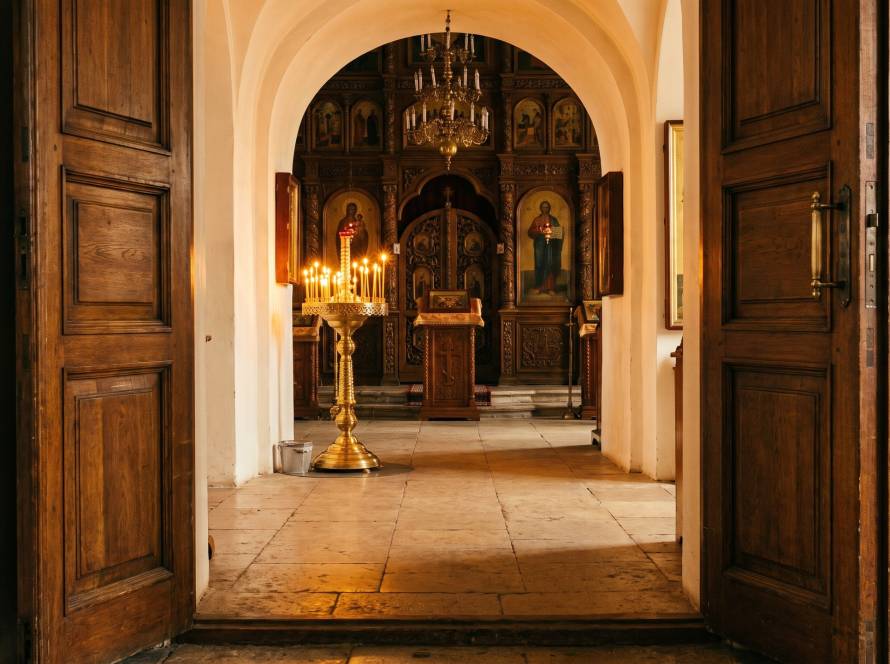
The service itself has a completely different feel from Sunday morning. It starts around 6pm, after most people have been fasting all day. If you work a plant shift in Beaumont, you’re probably pretty hungry by the time you get there. That’s intentional. The evening timing, the hunger, the dim church lit mostly by candles, it all creates this solemn, penitential atmosphere that’s perfect for Lent.
We begin with Vespers. Psalms are chanted. Old Testament readings from Genesis and Proverbs replace the usual Epistle and Gospel. Then comes one of the most striking moments: the priest emerges from the altar carrying a lit candle and censer, blessing the people (many of whom are kneeling) while singing “The Light of Christ illumines all.” This was originally directed at catechumens preparing for baptism at Pascha. It still carries that sense of Christ’s light breaking into our darkness.
The procession of the Gifts happens differently too. Instead of one Great Entrance like on Sunday mornings, there are two quiet transfers. First the priest brings the presanctified Lamb from the altar to the table of oblation. Later, he carries it back to the altar through the north door with his head covered, while we sing “Now the heavenly powers minister invisibly with us.” That hymn replaces the Cherubic Hymn you’d hear at a regular Liturgy. The words are haunting: “Behold the King of Glory enters.”
You can feel the angels in the room during that moment.
After the Our Father, we commune just as we would on Sunday, approaching the chalice, receiving the Body and Blood of Christ. But everything leading up to it has been quieter, more penitential, more focused on our need for God’s mercy. The Prayer of St. Ephraim with its prostrations (“O Lord and Master of my life, take from me the spirit of sloth…”) gets repeated throughout. Your knees will know you’ve been to a Presanctified Liturgy.
Fr. Alexander Schmemann wrote about this service in his book Great Lent. He emphasized how it sustains us through the fast, giving us strength for the spiritual battle while maintaining Lent’s repentant character. We’re not celebrating the Resurrection yet. We’re still in the struggle. But Christ feeds us along the way.
Most Antiochian parishes serve the Presanctified on Wednesday and Friday evenings during Lent. The service books also appoint it for the first three days of Holy Week, but at St. Michael those evenings are given to the Bridegroom services and Holy Unction. Some add other weekdays if there’s enough attendance. It’s worth rearranging your schedule to experience at least a few of these services. They’re some of the most ancient and beautiful worship the Church offers, and they’ll change how you experience Lent, not as mere deprivation, but as this slow, deliberate walk toward Pascha with Christ himself sustaining you in the Eucharist along the way.