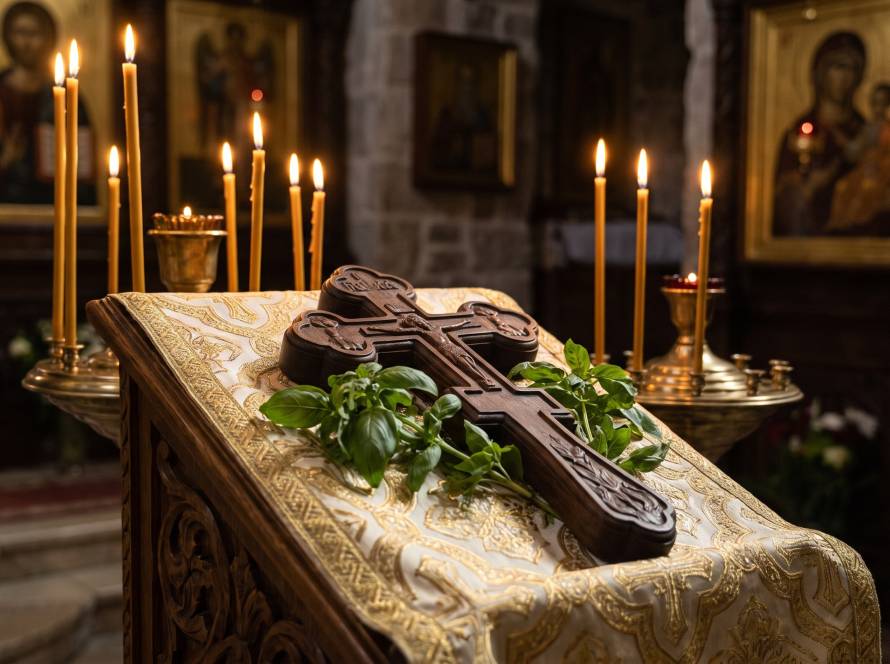
The Nativity Fast is a 40-day period of prayer and fasting that prepares us to receive Christ at His Nativity. It runs from November 15 through December 24 every year.
We also call it St. Philip’s Fast because it begins the day after we celebrate the Feast of St. Philip the Apostle on November 14. If you grew up Protestant, you probably know this season as Advent. But there are some real differences.
How It’s Different from What You Might Know
Western Advent typically lasts about four weeks. Ours is 40 days. That number isn’t random. It echoes Christ’s 40 days in the wilderness and the 40-day fasts we see throughout Scripture. The Church understands that real preparation takes time.
And it’s not just about lighting candles or opening little calendar doors. Those things are fine. But Orthodox fasting is more demanding. We’re talking about actual changes to what you eat, when you pray, how often you’re in church.
The Nativity Fast is one of four major fasting seasons, along with Great Lent, the Apostles’ Fast, and the Dormition Fast.
What the Fasting Actually Looks Like
Here’s where people get nervous. The traditional fasting rule means no meat, no dairy, no eggs. On Wednesdays and Fridays the typical rule also excludes fish, wine, and oil; at St. Michael, oil and wine are allowed on fast days. On other days the rule is lighter, and customs differ on when fish is allowed.
But the fast has two parts. From November 15 until around December 12, the rules are somewhat less intense. After the Feast of St. Spyridon on December 12, things tighten up as we approach the Nativity itself.
There are exceptions built in. When certain feast days fall during the fast, we get some relief. The Entrance of the Theotokos on November 21, St. Nicholas on December 6, St. Spyridon on December 12. On your parish’s patronal feast, you can have fish, wine, and oil even if it falls on a fasting day.
If you work rotating shifts at one of the refineries around here, or if you’ve got health issues, or if you’re pregnant or nursing, talk to your priest. The fasting rules are meant to heal us, not crush us. Your priest can help you figure out what’s actually doable for your situation. Maybe you start by just keeping the Wednesday and Friday fasts. That’s still something real.
Why We Do This
We’re not earning our salvation by skipping cheese. Fasting is medicine, not merit badges.
The point is to slow down. To remember that we don’t live by bread alone. To create space in our lives for prayer and repentance so that when December 25 arrives, we’re actually ready to receive the Word made flesh. It’s too easy to sleepwalk through December, showing up at church on Christmas because that’s what you do, without having prepared your heart at all.
The fast also unites us to the Church across time. Christians have kept this fast for many centuries. When you skip meat on a Wednesday in November, you’re doing what your spiritual ancestors did. You’re part of something bigger than yourself.
What Else Happens During This Season
Fasting is only part of it. You should be praying more. Morning and evening prayers at home, definitely. Try to get to an extra service each week if you can.
Read something spiritually useful instead of just scrolling your phone before bed. The Gospels, obviously. Maybe one of Met. Kallistos Ware’s books if you’re still getting your bearings in Orthodoxy.
Talk to your family about what you’re doing and why. If your Baptist mama asks why you’re not eating turkey at Thanksgiving this year, that’s a chance to explain something true about your faith. Do it with love, not like you’re trying to prove something.
Starting Where You Are
If this is your first Nativity Fast, don’t panic. Nobody’s expecting you to go from zero to full monastic observance overnight. Start somewhere. Keep the Wednesday and Friday fasts. Add one extra prayer rule. Show up for Vespers one evening when you normally wouldn’t.
The fast begins on November 15. Talk to Fr. Michael about what makes sense for you. He has walked plenty of people through their first fasting season. He knows what he’s doing.
And when December 25 finally comes and we sing “Christ is born, glorify Him,” you’ll know what it cost you to get there. You’ll have made room for Him.