Start with what you share, not what divides you. Your Catholic family already believes in the Trinity, the sacraments, the saints, the Virgin Mary, and apostolic succession. That’s a lot. You’re not joining something completely alien to what they know.
The conversation gets harder when you need to explain why you left. And you do need to explain it, because silence breeds assumptions. They’ll wonder if you think they’re going to hell or if you’ve joined some exotic ethnic club. Neither is true, but you have to say so.
The Big Differences That Matter
Three things separate us, and they’re all connected.
First, papal authority. Catholics believe the Pope has immediate, supreme, universal jurisdiction over every Christian and every church. We don’t. We believe the Bishop of Rome historically held a primacy of honor as first among equals, but that all bishops share authority together through councils. It’s not that we reject Rome, we reject what Rome became after the schism. The Pope can’t change what an ecumenical council decided. Nobody can.
Second, the filioque. That’s the phrase “and the Son” that got added to the Creed in the West. The original Creed says the Holy Spirit proceeds from the Father. Rome added “and the Son” without asking the East, without calling a council, and over the objections of some of their own popes. Pope Leo III actually had the original Creed without the filioque engraved on silver tablets in the ninth century. But later popes approved the change anyway, and that’s exactly the problem. You can’t just edit the Creed because you think it’s helpful. The issue isn’t just the theology of the Spirit’s procession, it’s who gets to decide these things.
Third, there are several Catholic dogmas we don’t hold. Purgatory as a place of temporal punishment and satisfaction for sins. The Immaculate Conception as a defined dogma about Mary being preserved from original sin at her conception. Papal infallibility. These developed in the West after the schism, and we see them as unnecessary additions to the faith once delivered to the saints.
Your family might say these are small things. They’re not small to us, but you don’t have to be combative about it. Just be honest. “The Church believed one way for a thousand years, and then these things changed. I need to be where the faith hasn’t changed.”
How to Actually Have This Conversation
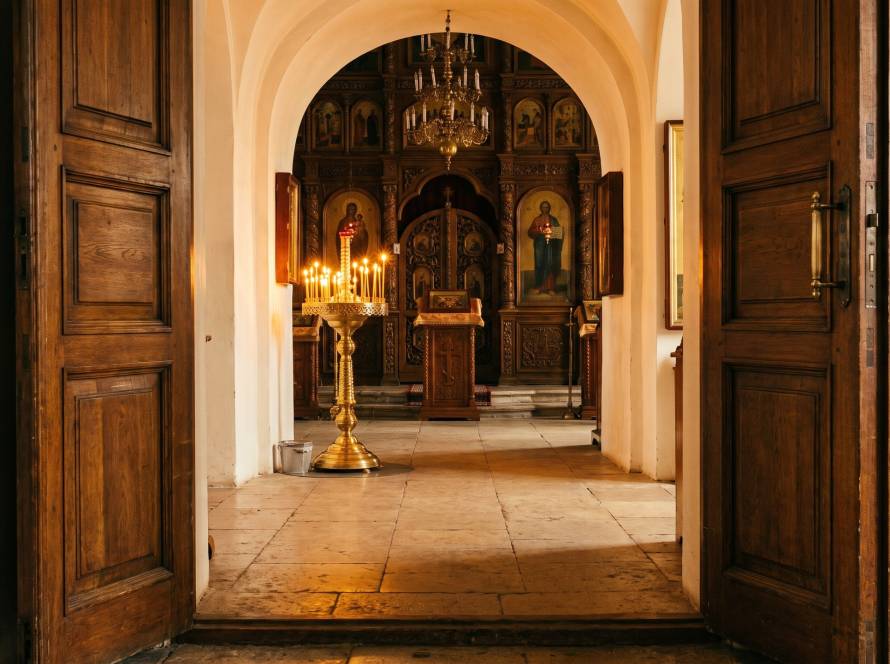
Don’t lead with theology. Lead with your experience. Tell them about the Divine Liturgy, about how the worship connects you to the early Church, about how the prayers and fasting are healing you. Let them see that you’re not running away from Christ but running toward Him.
When they ask questions, answer them. But don’t turn Thanksgiving dinner into a debate about the filioque. If your mom asks why you can’t just stay Catholic, you can say something like, “I believe the Orthodox Church is the Church Christ founded, and I need to be there. But I don’t think you’re a bad Christian or that God doesn’t love you. I just have to follow my conscience on this.”
Some of your family will be hurt. That’s real, and you can’t fix it by arguing better. Your uncle might think you’re saying his faith is worthless. Your grandmother might cry. Let them feel what they feel. Keep loving them. Keep showing up. Don’t get defensive when they make comments about “the Greek church” or ask if you worship icons now.
Invite them to a service. Seriously. One Pascha vigil is worth a thousand explanations. They’ll recognize the Scriptures, the prayers, the reverence. They’ll see it’s ancient. And if they don’t come, that’s fine too.
What You Shouldn’t Say
Don’t tell them they’re not real Christians. Don’t call the Catholic Church apostate. Catholics are baptized Christians who hold much of the apostolic faith, though we can’t accept some of what has been added or changed. That’s different from saying they’re pagans.
Don’t act like you’ve figured out something they’re too simple to understand. Half the people in Southeast Texas who think you’re joining a cult have read more theology than you have. Humility matters.
And don’t promise them that Orthodoxy and Catholicism will reunite soon so this doesn’t really matter. We’ve been separated for a thousand years. We pray for unity, but we’re honest about the obstacles.
The Long Game
This isn’t a one-conversation thing. You’ll be explaining Orthodoxy to your family for years. Some of them will eventually get it. Some won’t. Some will come to Pascha and be moved to tears. Some will keep asking when you’re coming back to “normal church.”
Your job isn’t to convert them. Your job is to live your faith so clearly and lovingly that they can’t dismiss it. When your Catholic aunt sees you fasting before communion, when she sees you cross yourself at the name of the Trinity, when she sees you actually living like the sacraments matter, that’s your witness.
If you want to give them something to read, Fr. Andrew Stephen Damick’s book “Orthodoxy and Heterodoxy” handles these questions with charity and clarity. But most of your family won’t read it. They’ll just watch you. Make sure what they see is Christ.