They’re both Orthodox. That’s the first thing to know. Byzantine and Western Rite are two different liturgical traditions within the one Orthodox Church, and the Antiochian Archdiocese officially recognizes both.
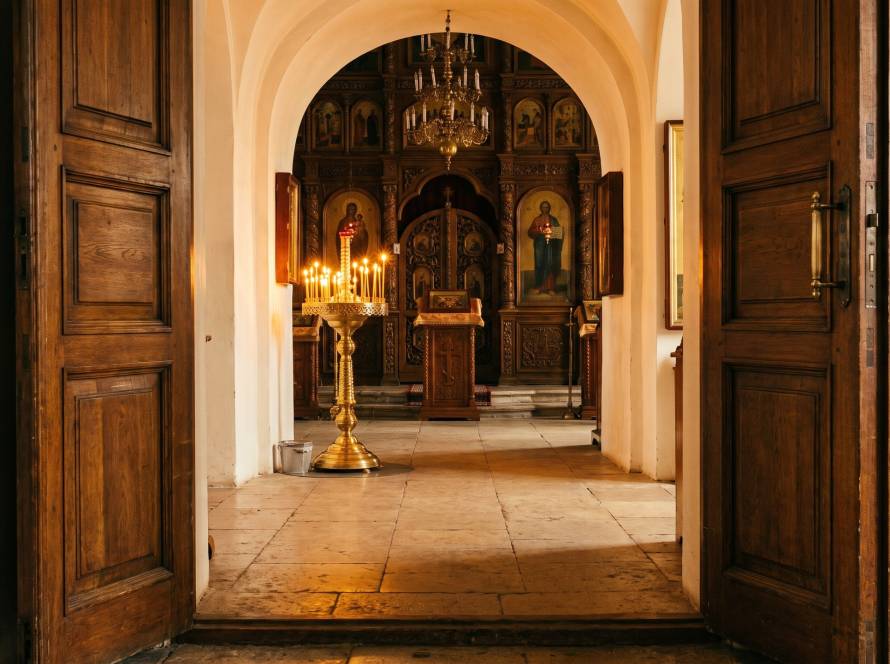
Most Orthodox parishes you’ll encounter, including St. Michael’s, use the Byzantine Rite. This is the Eastern liturgical tradition that developed in the Greek and Slavic-speaking churches. When you attend a Byzantine parish, you’ll experience the Divine Liturgy of St. John Chrysostom (or occasionally St. Basil’s Liturgy), Byzantine chant, icons covering the walls, and the liturgical rhythms that have characterized Eastern Christianity for centuries. It’s what most people picture when they think of Orthodox worship.
Western Rite Orthodoxy uses liturgical forms that originated in the pre-schism Western Church. These are ancient Western liturgies that have been carefully corrected to align with Orthodox theology. The Antiochian Archdiocese established a Western Rite Vicariate in 1958 under Metropolitan Antony to oversee these parishes. They’re fully Orthodox, under the same bishops, believing the same faith. They just worship differently.
What Makes Them Different
The differences are liturgical, not theological.
Western Rite services are typically shorter and structurally simpler than Byzantine ones. They use Western hymnody and follow Western liturgical patterns that would feel familiar to someone from a Catholic or Anglican background. The most common Western Rite liturgy in the Antiochian Archdiocese is the Liturgy of St. Tikhon, which is adapted from Anglican sources. Some Western Rite parishes use corrected forms of the old Roman Mass.
When a Western liturgy becomes Orthodox, the filioque gets removed from the Creed. An explicit epiclesis (calling down of the Holy Spirit) gets added or strengthened in the Eucharistic prayer, because Orthodox theology insists the Spirit transforms the gifts. Any prayers or practices that don’t align with Orthodox teaching get adjusted or dropped entirely.
The Byzantine Liturgy, by contrast, has its own distinctive shape. There’s more repetition, more elaborate hymnography, a different musical tradition. If you’ve been to a service here, you may recognize this. The liturgy feels like it’s circling around the mystery rather than moving through it in a straight line.
Is One More “Authentic”?
Both are Orthodox when they’re under a canonical bishop and celebrate the same sacraments.
Byzantine practice is the dominant form. It’s what the vast majority of Orthodox Christians worldwide use, and it represents an unbroken continuity in the East. Western Rite is a minority within Orthodoxy, and there’s ongoing discussion within the Church about how much post-schism Western material should be retained. Some Orthodox jurisdictions don’t use Western Rite at all. The Antiochian Archdiocese has chosen to embrace it as a legitimate way for Western Christians to enter Orthodoxy while preserving something of their liturgical heritage.
It’s not about one being “more Orthodox” than the other. It’s about different expressions of the same faith. Think of it like this: if you grew up Baptist here in Beaumont and you’re drawn to Orthodoxy, you’ll probably find the Byzantine Liturgy at St. Michael’s. It’ll be new, maybe overwhelming at first, but it’s the fullness of the faith you’re seeking. If you came from a high Anglican or traditional Catholic background and there was a Western Rite parish nearby, you might find that the familiar liturgical structure helps you enter into Orthodox worship more easily. Either way, you’re receiving the same Christ in the Eucharist, confessing the same Creed, under the same bishop.
Why This Matters for Inquirers
Most people exploring Orthodoxy in Southeast Texas will encounter Byzantine parishes. That’s just the reality. Western Rite parishes exist but they’re scattered. If you’re visiting St. Michael’s, you’re experiencing Byzantine worship, and that’s the tradition you’ll be formed in if you become Orthodox here.
But knowing about Western Rite helps you understand something important: Orthodoxy isn’t ethnically bound. We’re not just “the Greek Church” or “the Russian Church.” The Antiochian Archdiocese’s embrace of Western Rite demonstrates that Orthodox faith can be expressed in different liturgical languages. The faith is what matters. The theology is what’s non-negotiable. The liturgical form, while deeply formative and not arbitrary, has some flexibility.
If you visit an Orthodox parish and someone tells you it’s Western Rite, don’t worry that it’s somehow less Orthodox. It’s not. It’s just a different door into the same house. And if you’re at a Byzantine parish like ours and the liturgy feels foreign at first, that’s normal. You’re not just joining a church, you’re entering a whole Christian civilization with its own rhythms and language. Give it time. Let it form you.